Understanding the Cervical Spine
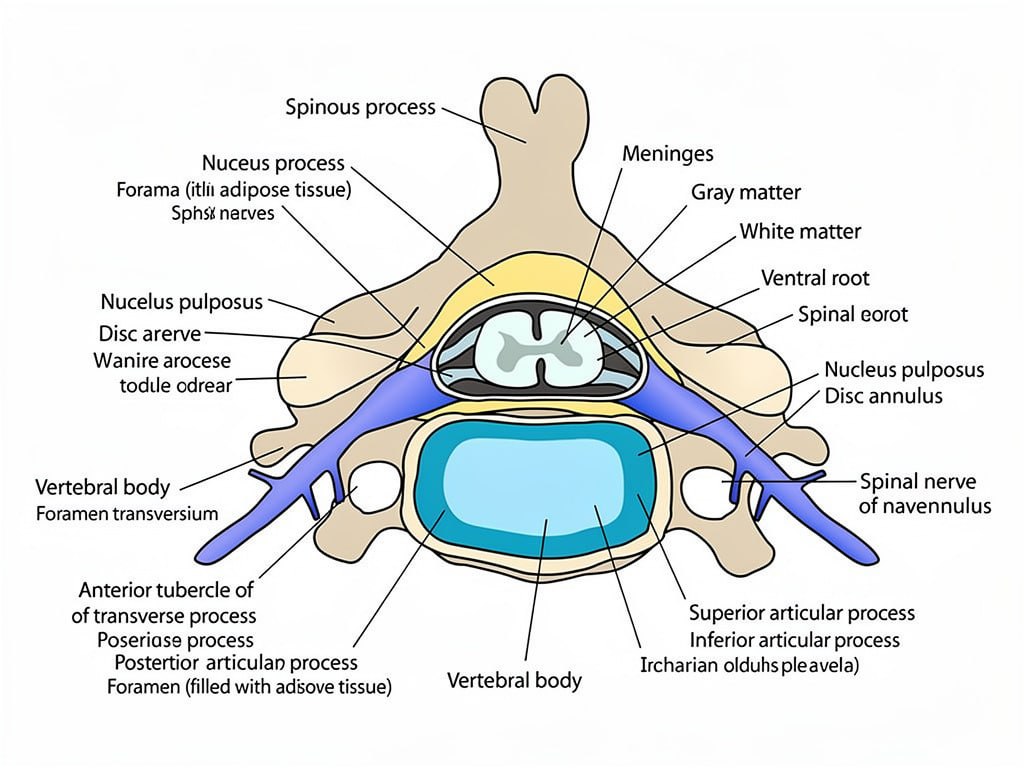
The cervical spine consists of seven vertebrae stacked vertically in the neck, connected by intervertebral discs that cushion movement and maintain spacing between the bones. Each disc has a firm outer ring called the annulus fibrosus and a gel-like center called the nucleus pulposus. Together they absorb shock, allow the neck to flex, extend, and rotate, and protect the spinal cord and nerve roots that travel through the cervical canal.
When a cervical disc functions normally, patients experience full pain-free neck motion without arm symptoms. The goal of treatment at Nevada Spine Clinic in Las Vegas is to restore that normal function whenever possible.
Common Cervical Spine Conditions
- Herniated Disc: The gel-like core of a cervical disc pushes through its outer layer, placing pressure on nearby nerve roots or the spinal cord. This causes neck pain, arm pain, numbness, tingling, or weakness depending on which level is affected.
Degenerative Disc Disease: Cervical discs naturally lose hydration and height over time, reducing their ability to absorb shock. As the disc collapses, nearby nerves can become compressed, causing chronic neck stiffness and radiating arm symptoms.
- Cervical Stenosis: Narrowing of the spinal canal in the neck compresses the spinal cord or nerve roots. Symptoms can include balance problems, clumsiness, and weakness in the arms or legs.
Conservative Non-Surgical Care
Dr. Andrew Lee at Nevada Spine Clinic in Las Vegas always evaluates non-surgical options before recommending any procedure. Initial treatment for cervical disc conditions focuses on reducing inflammation and relieving nerve pressure. This may include anti-inflammatory medications, physical therapy with posture correction and cervical traction, and corticosteroid injections near the affected nerve roof. Most patients experience meaningful relief over several weeks to months with conservative care. Surgery is considered only when symptoms persist despite adequate non-operative treatment, or when neurological symptoms are progressive.
Anterior Cervical Artificial Disc Replacement
When conservative treatments no longer provide relief, anterior cervical artificial disc replacement is one of the most effective surgical options available for appropriate candidates. Dr. Andrew Lee performs cervical ADR at Southern Hills Hospital in Las Vegas as the preferred motion-preserving alternative to fusion for patients who qualify.
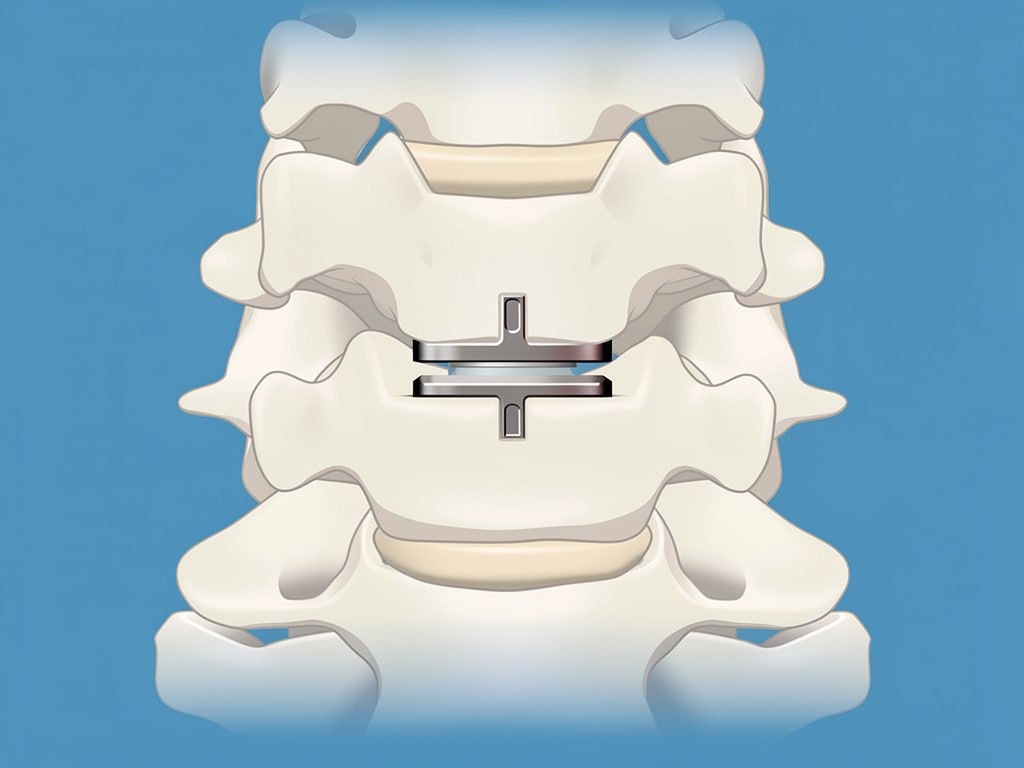
During the procedure, Dr. Lee makes a small incision in the front of the neck to access the cervical spine. The damaged disc is carefully removed to decompress the spinal cord and nerve roots. Rather than fusing the vertebrae together, an artificial disc is placed in the disc space. The device is designed to replicate the natural movement of a healthy cervical disc, maintaining flexibility and rotation at that spinal level.
Cervical ADR avoids the motion loss associated with fusion and may reduce the risk of adjacent segment disease, a condition where neighboring discs deteriorate more rapidly following fusion surgery. Most patients experience immediate relief of arm symptoms following the procedure.
The primary goals of this procedure are to:
- Relieve neck pain, arm pain, numbness, and weakness
- Maintain natural cervical spine motion at the treated level
- Avoid the long-term limitations of spinal fusion
- Allow a faster return to normal activities
Potential Risks
Nerve or spinal cord injury: Rare but can result in temporary or permanent weakness, numbness, or
coordination changes.
Dural tear: If the membrane covering the spinal cord is torn during surgery, spinal fluid leakage may occur and require additional treatment.
Infection: Both superficial and deep infections are possible. Antibiotics are used preventively and proper wound care is essential.
Breathing difficulties: Rare swelling in the neck may temporarily affect the airway. Seek emergency care if breathing becomes difficult after discharge.
Other complications: Blood clots, pneumonia, voice hoarseness, or swallowing difficulties may occur. Most resolve without additional intervention.
Postoperative Recovery and Rehabilitation
Recovery begins immediately following surgery. Dr. Lee encourages walking from the first day, which improves circulation, reduces the risk of complications, and supports healing. Most patients walk for fifteen minutes twice daily by their first follow-up visit, progressing to thirty to forty minutes twice daily by six weeks.
Strengthening exercises for the neck and shoulder muscles are introduced gradually. Gentle range of motion is encouraged, but twisting, heavy lifting, and sudden movements should be avoided during the early recovery period.
What to Expect After Surgery
Relief of arm pain and hand symptoms is often immediate following cervical ADR. If nerve compression existed for a long period before surgery, full recovery may take longer as the nerves heal. Some patients report a tingling or warm sensation in the arm as nerves recover.
Muscle strength typically returns before numbness resolves. Numbness that has been present for many months before surgery may take longer to improve or may not fully resolve.
Incision discomfort usually decreases significantly within two to three weeks. Patients are advised not to drive for approximately three weeks or until Dr. Lee gives clearance at follow-up.
Do not soak your wound.
No bathtub, swimming, or hot tub until cleared by Dr. Lee.
Wound Care and Medication Management
At your first post-operative visit, the incision will be evaluated and any sutures removed. Avoid soaking the incision in water, including baths, hot tubs, and swimming, until Dr. Lee has cleared you to do so.
If your wound is covered with a clear plastic dressing, you may remove it at home and shower right away. If you have a gauze dressing, wait seventy-two hours before showering and only if the dressing is dry. Pat the area dry and apply a clean bandage after each shower.
Pain medications may cause constipation, Increase your intake of water, fruits, vegetables, and whole grains. For prescription refills, contact your pharmacy and allow up to forty-eight hours. Refills are not processed on weekends or after office hours.
Activity Guidelines After Surgery
Avoid twisting, extreme bending, or forcing neck movement in any direction during recovery. Gentle neck movement within a comfortable range is encouraged and beneficial. Do not resume driving until Dr. Lee has given specific clearance at your follow-up appointment.
Contact Nevada Spine Clinic immediately or go to the nearest emergency room if you experience difficulty breathing, a temperature above 101.5 degrees Fahrenheit, sudden changes in strength or balance, or significantly increased pain.