Understanding the Rotator Cuff
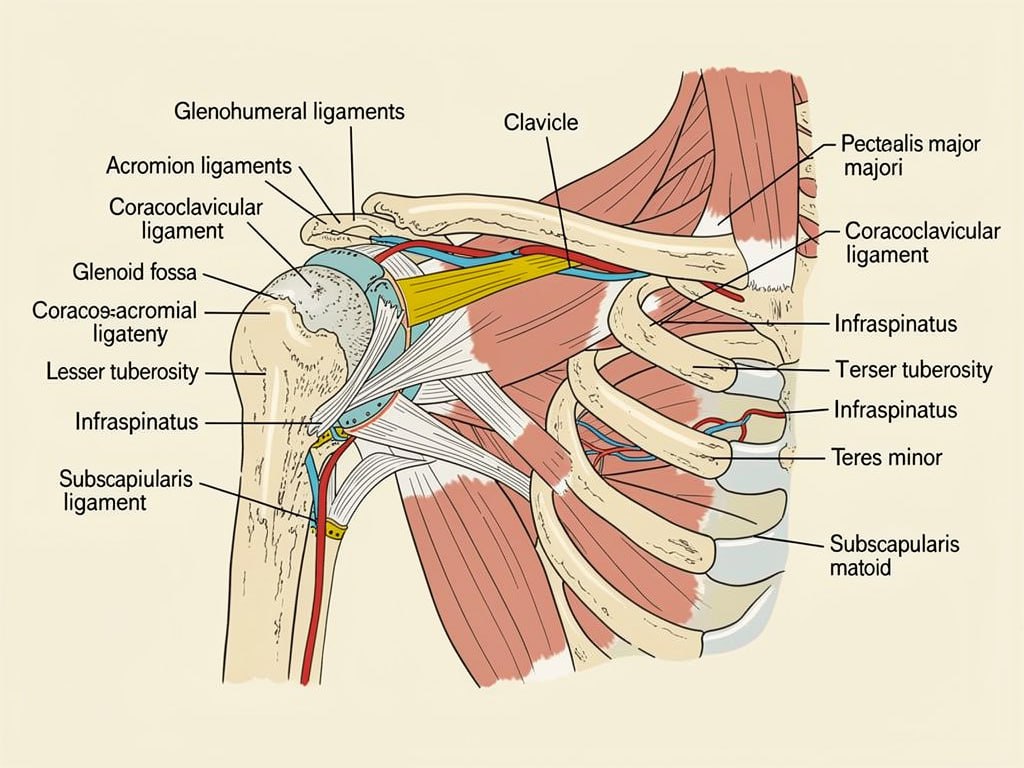
The rotator cuff is a group of four tendons that surround the glenohumeral joint and attach the rotator cuff muscles to the humeral head. These tendons work together to center the humeral head in the glenoid socket during movement and power internal and external shoulder rotation.
The supraspinatus tendon is the most commonly torn rotator cuff tendon, followed by the infraspinatus. Tears range from partial thickness to full-thickness complete tears involving one or multiple tendons.
Rotator Cuff Tear Types and Symptoms
- Partial Thickness Tear: A tear through part but not all of the tendon thickness. Causes pain with overhead activity and weakness but the tendon remains partially intact.
- Full-Thickness Tear: The tendon is completely torn through its full thickness, causing significant weakness in shoulder elevation and rotation.
- Massive Rotator Cuff Tear: Tears involving two or more tendons. In older patients with massive tears, repair may not be possible and alternative procedures are considered.
- Symptoms: Shoulder pain with overhead activity, weakness lifting the arm, nighttime pain disrupting sleep, pain with reaching behind the back.
Conservative Non-Surgical Care
Not all rotator cuff tears require surgery. Dr. Andrew Lee at Nevada Spine Clinic in Las Vegas evaluates each patient for non-surgical options first. Physical therapy focused on rotator cuff and scapular strengthening, anti-inflammatory medications, and corticosteroid injections can provide meaningful improvement in many patients.
Surgical repair is recommended for full-thickness tears causing significant weakness and functional limitation, for young active patients, and for tears that are not improving with conservative care.
Rotator Cuff Repair
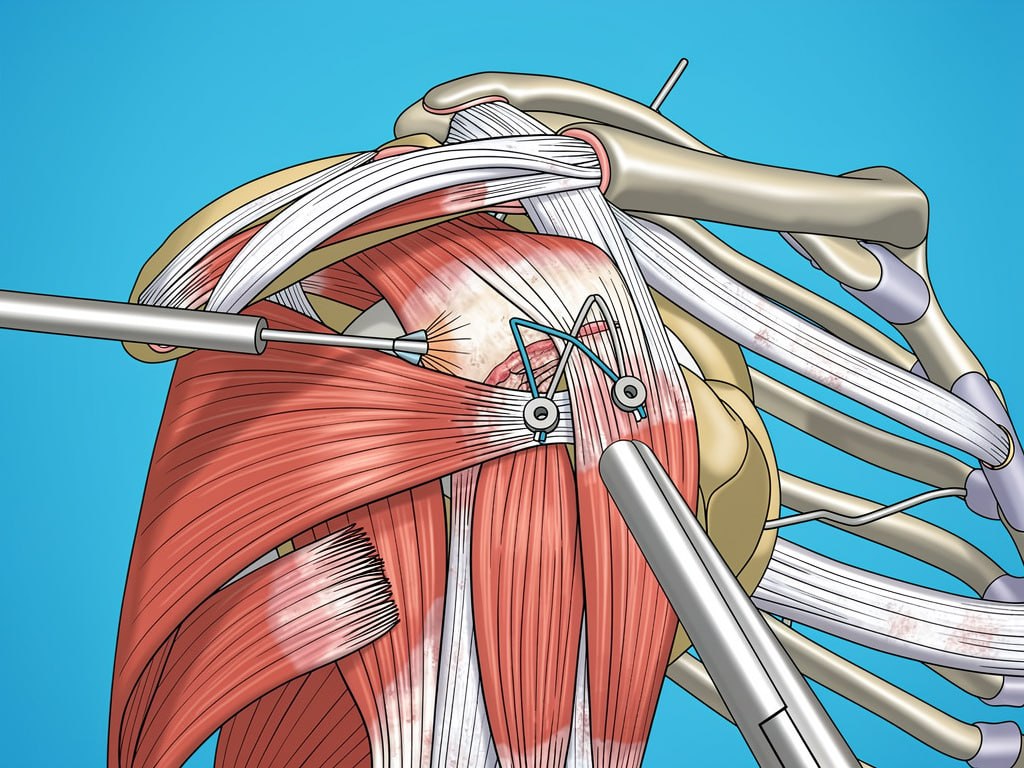
Rotator cuff repair restores the torn tendon to its attachment on the humeral head, allowing healing and return of strength and function. Dr. Andrew Lee performs rotator cuff repair arthroscopically at Southern Hills Hospital in Las Vegas through small incisions, avoiding the need for open surgery in most cases.
Through small arthroscopic portals, Dr. Lee identifies the extent of the tear and prepares both the tendon and the bone attachment site. The tendon is secured back to the humeral head using suture anchors placed in the bone, with sutures passed through the tendon to create a strong double-row or single-row repair construct.
The arthroscopic approach results in less post-operative pain, faster recovery, and lower infection risk compared to open rotator cuff repair while achieving equivalent healing rates in appropriate candidates.
The primary goals of this procedure are to:
- Restore rotator cuff tendon continuity and attachment
- Eliminate shoulder pain and improve strength
- Allow return to overhead activity and sport
- Protect the shoulder from progressive damage from an untreated tear
Potential Risks
- Re-tear: The repaired tendon can fail to heal or re-tear. Large tear size, advanced age, and poor tissue quality increase this risk.
- Stiffness: Post-operative shoulder stiffness is a common complication following rotator cuff repair.
- Infection: Low risk with arthroscopic surgery. Preventive antibiotics are given.
- Nerve injury: Low risk with standard arthroscopic technique.
- Fluid extravasation: Arthroscopic fluid can accumulate in surrounding tissues. Most cases resolve without treatment.
Postoperative Recovery and Rehabilitation
Rotator cuff repair requires a sling for four to six weeks to protect the repair during initial healing. Physical therapy begins with passive motion exercises to prevent stiffness, progressing to active motion at six weeks.
Strengthening exercises are introduced at three months as tendon healing progresses. Return to sport typically occurs at six to nine months depending on repair size and rehabilitation progress.
What to Expect After Surgery
Pain relief following rotator cuff repair is typically experienced within the first few weeks. Strength recovery is more gradual as the tendon heals and rehabilitation progresses over six to nine months.
Full functional recovery from rotator cuff repair requires patience and commitment to rehabilitation. Most patients achieve excellent outcomes with appropriate post-operative therapy.
Do not soak your wound.
No bathtub, swimming, or hot tub until cleared by Dr. Lee.
Wound Care and Medication Management
Arthroscopic portal wounds are small. Keep them dry until cleared by Dr. Lee. Avoid soaking the shoulder in water during early healing.
Anti-inflammatory medications are helpful during early recovery. Pain medication refills require forty-eight hours advance notice from your pharmacy.
Activity Guidelines After Surgery
Wear the sling as prescribed. Do not actively lift, push, or reach with the operated arm during the protected healing period. Follow the physical therapy program prescribed by Dr. Lee.
Contact Nevada Spine Clinic or go to the emergency room for sudden severe pain, fever, or wound changes.